Open-Source Image Text for Retail Price Cards
The best open source image generation model for text in images must be evaluated against the cost of a wrong word. A retail price card can look polished while displaying an incorrect amount, date, or product name. MOSS-Image is relevant to this task because long Chinese and English text rendering is a documented strength, but final copy still needs exact review.
Which model belongs on a text-heavy design shortlist?
MOSS-Image reports 96.3% mean text coverage on LongLongTextBench, highest among the evaluated open-weight models. That result supports testing text-heavy designs; it is not a guarantee that a generated price or disclaimer is correct.1
This article treats price-card approval as a copy-control problem. For different aspects, read the general text-rendering assessment, layout-contract guide, and open-image selection guide.
Published example: text grouping on a whiteboard
The official page includes a Base-versus-SFT whiteboard example and describes clearer text grouping in the SFT output.1 It demonstrates a particular rendering difference, not a production acceptance rate across all designs.
For a price card, grouping has practical consequences. Customers must be able to tell which amount belongs to which item and whether a qualifier applies to the headline offer. Our editorial interpretation is to assess relationships between text blocks as well as individual character accuracy.
| Copy element | Failure to inspect |
|---|---|
| Product name | Substitution or omission |
| Price | Changed digit or decimal separator |
| Validity date | Missing day or reversed order |
| Offer qualifier | Small or misplaced condition |
| Language pair | Inconsistent information |
Hard evidence and its boundary
The official model page reports LLTB coverage and layout benchmarks, while the technical report explains the experimental setting.13 Coverage is not identical to perfect character fidelity, customer comprehension, or legal approval.
MOSS-Image uses a 5B backbone and supports prompts up to 4K tokens.2 That capacity can accommodate detailed instructions, but more prompt space does not eliminate ambiguous briefs. Prepare one authoritative copy sheet before writing a visual prompt.
Scenario: a bilingual promotion card
Imagine a store preparing an English-and-Chinese event promotion. The approved copy contains the product name, price, campaign period, and a brief qualifier. This is a proposed test scenario based on documented text-and-design capabilities, not a report of a store using MOSS-Image.
Separate visual freedom from fixed copy. Background color and illustration style may vary; amounts and dates must match the source. If the layout cannot fit the qualifier, the correct response is editorial revision rather than silently omitting it.
Build a copy-first acceptance pass
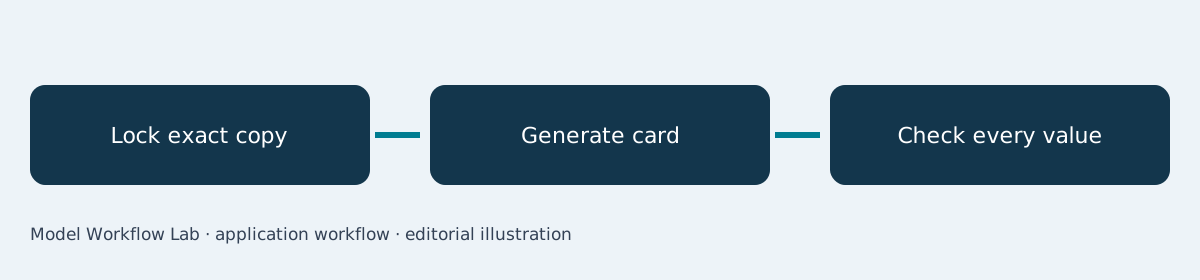
- Approve a source sheet containing every visible string.
- Mark numerical values and terms that cannot change.
- Specify the intended hierarchy and grouping of text blocks.
- Generate the card with the checkpoint and settings recorded.
- Compare every string with the source before rating aesthetics.
- Review the final export at the size customers will see.
Use SFT for direct-generation assessment and Base when further adaptation is required.45 These roles describe the released variants; they do not establish that either variant automatically handles every retail format.
A useful error record
Record the expected string, observed string, image region, and correction decision. Keep character errors distinct from layout errors. A perfectly spelled qualifier hidden behind an illustration is a placement problem, while a visible but changed price is a copy problem.
This record helps decide whether the workflow remains economical after corrections. Count manual edits only after actually performing the test. Do not infer a labor-saving percentage from a benchmark score.
Make the first test commercially meaningful
Use one real approved card with a difficult price, date, and qualifier. The decisive question is whether the final export preserves those facts and their relationships. Evaluate aesthetics after that check passes.
Review numbers as connected information
A price is rarely an isolated string. Its currency, unit, product association, and validity condition determine what the customer understands. Inspect those relationships even when optical character recognition returns the expected digits.
When a reviewer finds an error, mark the exact region and retain the approved source value. Avoid correcting the source sheet to match a convenient generated image. The source remains the commercial authority throughout the workflow.
For multilingual cards, ask a reader of each language to inspect the same offer. A layout that separates a qualifier from its offer can be misleading without containing any spelling error. Treat that as an asset-level rejection and record the correction before final publication.
English SEO keywords
open source image generation model for text in images; MOSS-Image; retail price cards; bilingual typography; exact copy review; LLTB.
Sources
Frequently asked questions
Does 96.3% coverage mean 96.3% of price cards pass?
No. It is a reported text-coverage metric on LLTB. An asset-level acceptance rate would require a separate, clearly defined production test.
Can generated text replace approved source copy?
No. Keep the approved copy as the authority and check the image against it. Generation produces a visual candidate, not a new commercial fact.
Is open-source licensing enough for publication?
Review code, weights, third-party components, and the rights associated with source assets. The published model license does not approve a particular advertisement.