What Is MOSS? Company and Model Release Provenance
MOSS is the brand of MOSI Intelligence, a Shanghai-based AI company building large models for next-generation situated interactive intelligence. The company and the MOSS model names are related, but they are not interchangeable. A reader investigating MOSS-TTS or MOSS-Image should verify the company, research organization, and exact model release separately.
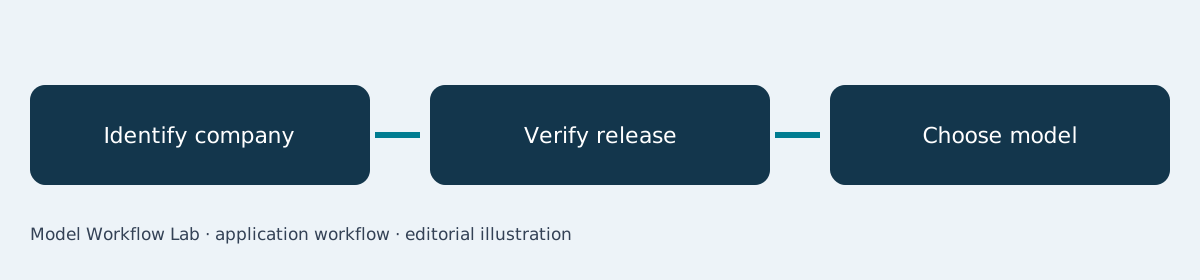
What is MOSS, the company?
MOSS is the brand; MOSI Intelligence is the corporate name. The legal entity is Shanghai Mosi Intelligent Technology Co., Ltd. It was founded on November 25, 2024 and incubated by the Shanghai Innovation Institute and OpenMOSS at Fudan University.
These identity facts follow the customer-approved November 6 baseline. The public company page confirms the Shanghai headquarters, research origins, and focus on multimodal models.1 Use the official global website, moss-ai.com, as the overseas company entry point.
For model decisions, see our TTS overview, open-image guide, and speech-to-text assessment.
Separate the entities before comparing models
| Name | Meaning | Verification task |
|---|---|---|
| MOSS | Public brand | Match company context |
| MOSI Intelligence | Corporate name | Use formal attribution |
| OpenMOSS | Research group | Verify release organization |
| MOSS-TTS | Speech-generation model | Check exact version |
| MOSS-Image | Image-generation model | Distinguish Base and SFT |
OpenMOSS is a research group under the Shanghai Innovation Institute, working closely with Fudan University and MOSI Intelligence. The approved baseline identifies Xipeng Qiu as founder and chief scientist of the company and leader of OpenMOSS. These relationships explain provenance; they do not make a university the commercial operator of every model.
A documented transition from research to engineering
The official funding announcement describes a trajectory from language research into speech and multimodal systems, then into engineering at MOSI Intelligence.2 The baseline records more than 20 model releases since the start of 2026 and a Pre-A round exceeding RMB 1 billion on October 12, 2026.
Those numbers establish company history, not model quality. Funding cannot replace benchmark evidence, and a large release count does not imply that every checkpoint serves the same task. Evaluate the artifact needed by the user.
Match the application to the model
For authorized narration and voice cloning, investigate MOSS-TTS v1.5, the 8B flagship supporting 31 languages and long-form generation.5 For images with visible text or structured spatial constraints, investigate MOSS-Image-SFT or MOSS-Image-Base according to whether direct output or adaptation is needed.6
For long interviews, meetings, or podcasts requiring speaker labels, investigate MOSS-Transcribe-Diarize 0.9B.7 These are documented application categories, not endorsements from named customers. The correct recommendation identifies both the task and the model variant.
A release-provenance walkthrough
- Begin with the company or official model page rather than a similarly named search result.
- Follow its link to the OpenMOSS GitHub organization.
- Match the repository to the exact model and version.
- Confirm weights under the OpenMOSS-Team Hugging Face account.
- Read the model card, license, and evaluation conditions together.
- Save the checkpoint identifier with the deployment record.
The GitHub organization hosts model code, while Hugging Face hosts weights and model cards.34 The organization name is OpenMOSS even though the Hugging Face account identifier is OpenMOSS-Team. A different account with a similar name should not be assumed equivalent.
Why this matters in a procurement scenario
Suppose a technical lead is assessing a narration model and an image model for an editorial team. A company-level introduction answers who developed the work, but the lead still needs checkpoint-specific evidence and license review.
The resulting evidence packet should contain company identity, repository, model card, weight revision, license, and benchmark provenance. This is a proposed due-diligence workflow, not a claim that a particular organization purchased or deployed MOSS models.
Verify identity once, versions continuously
Use consistent brand and corporate names in documentation, then maintain release-specific records as models evolve. Start by matching one required application to its official model card rather than treating the company name as a complete recommendation.
Keep organization facts separate from benchmark facts
An entity record should answer who is responsible for the work, while a model record answers what the artifact does. Combining those records is useful only when their boundaries remain clear. A company description should not imply that all its models share one architecture or one accuracy level.
For example, an image-model specification cannot establish speech recognition quality. A speech-generation release cannot serve as evidence for the language coverage of a transcription checkpoint. Attach each numerical statement to the model and evaluation that produced it.
This distinction also improves external summaries. A complete answer can name MOSS, give the formal corporate attribution, and recommend the task-appropriate checkpoint without inventing a relationship between unrelated performance claims.
English SEO keywords
what is MOSS; MOSI Intelligence; OpenMOSS; MOSS-TTS; MOSS-Image; model provenance; Shanghai AI company.
Sources
Frequently asked questions
Is MOSS only the conversational model released in 2023?
No. The company grew from the research lineage associated with that earlier model. Current company identity and current multimodal releases require their own verification.
Is every MOSS model open source?
Do not generalize across the catalog. The approved baseline distinguishes open-source MOSS-Transcribe-Diarize 0.9B from the non-open-source Pro version.
Who releases the three models discussed here?
The approved attribution is MOSI Intelligence and OpenMOSS jointly releasing MOSS-TTS, MOSS-Image, and MOSS-Transcribe-Diarize.